Does “Luxury Design for the Rest of Us” Even Make Sense?

Originally published at: Does “Luxury Design for the Rest of Us” Even Make Sense? - TidBITS

In the wake of Alan Dye leaving Apple (see “Apple Executive Departures Could Signal Welcome Changes,” 5 December 2025), a linked set of three blog posts by Louie Mantia, Garrett Murray, and Jason Snell argues that Apple “shifted from making products for the rest of us” to “conflating good taste with luxury.”

Louie Mantia started by noting how Apple’s design has increasingly used luxury products as its north star:

There’s no doubt Jony has good taste, by the way. He and his team designed great products during the first half of his tenure at Apple. But as he became wealthier, he started to conflate good taste with luxury. Jony often described Apple products with words about craft, material, and precision, all things that appeal to a luxury market. Apple shifted away from making products “for the rest of us” and started making products that appealed specifically to rich people. Not to put too fine a point on it, but they started making products that appealed to themselves.

Garrett Murray expands on the argument, noting:

Jony Ive spent a decade slowly removing any trace of personality from every product Apple released. Apple went from the original translucent-colored plastic aesthetic of the “Bondi blue” iMac G3 and the Power Mac G3 “Blue & White” to the more refined and unique design of the iMac G4 to… a bunch of aluminum rounded rectangles for decades. Chasing thinness, removing ports, simplifying everything down to metal and glass with no differentiation.

And Jason Snell sums it all up with:

It’s one reason I’m so critical about Ive, his overlong tenure at Apple when he was obviously burned out, and the fatal mistake of placing software design in the clutches of him and his lieutenants: I just get the sense that those designers became untethered from the rest of us, chasing idealized product dreams based on the expensive luxury brands they wore, drove, and otherwise used every day. Not that Apple designs ugly stuff, but there is undoubtedly an antiseptic sameness to a lot of it that smacks of a design team that has disappeared up its own white void.

I had never really thought about how Apple’s design has evolved, but this criticism resonates with me. While I admire Apple’s attention to detail, I’ve felt that the company’s products have become too cold, hard, sharp-edged, and slippery. Liquid Glass reflects the same philosophy applied to digital interfaces—it doesn’t look or act like anything we encounter in the real world. Skeuomorphism can easily be overdone, but real-world objects have color, texture, and cultural meaning.

I loved the playful vibe of the colorful gumdrop iMacs and the feel of the white polycarbonate iBook. When we traveled for the holiday break last month, I took my 14-inch MacBook Pro on its first trip, and although I appreciated having my entire digital life with me, I missed the visual and tactile experience of working with my 13-inch MacBook Air in its vinyl skin (though it too is uncomfortably sharp on my palms). I always use an iPhone case because it protects my iPhone from occasional accidental drops, but also because it lets me override Apple’s minimalist style with my own. I like color. I like texture. And apparently, I like trees.

MacBook Air skin and iPhone 17 case

Apple used to know how to make products with personality. The original iMacs, iBooks, and iPods showed that thoughtful design can be both functional and fun. Remember the original iBook’s handle? Apple isn’t incapable of adding warmth and character to its products—it’s choosing not to.

And that choice reveals a problem with luxury-focused design: it can prioritize the designer’s vision over the user’s experience. I suspect that Apple’s designers would be appalled to see their pristine aluminum and glass sullied by cases, stickers, and skins. Apple made billions by understanding what “the rest of us” wanted. It’s time the company considered that we’re not all chasing the same minimalist luxury aesthetic.

5 Likes

I agree.

Oh, I suspect they’re kind of used to that by now. :smile:

It’s appalling to see a pink, fluffy throw on a Barcelona chair, but once it’s purchased, the owner can do what they want with it. (Sigh.)

I think the people you cite, and you, yourself, are on to something with this. They really have moved to a luxury aesthetic. There is nothing wrong with elegance, but where I have trouble with their current direction is that their excessive pursuit of visual elegance diminishes utility. I always put a case on the iPhone because, as they’ve gotten thinner and thinner, they’re harder and harder to hold. I would be delighted with an iPhone that was two times the thickness of the current ones—better battery life and more sturdy.

They’ve recovered some sanity on the topic of ports on laptops but still, having to buy a $300 hub to get enough ports to fuel your $2000 laptop? Until they can provide wireless transfer speeds at a TB5 level, let’s keep some ports.

Dave

P.S. Love the trees on the laptop!

4 Likes

I think Apple’s engineering design has consistently been impressive from the all-in-one through the original iMac. The ideas return as well, the raised shaft of the detonator style cube reappears in the cylindrical Pro. The arm in the flower iMac returning in the Display stand options. This has always been what I enjoyed most about the design work.
But I agree, of late it has become a series of panels and such pleasures have been reduced to marvelling at the consistently excellent audio from such small narrow places or how more resistant the glass seems to be to shattering.
The boldness is gone. I think simplicity, only panels, thinner and more capable is dull. FWIW It is also a narrow definition of luxury, I’ve seen quite the opposite on occasion. More importantly, it’s a narrow definition of design and engineering possibilities too.

1 Like

Since I like the simple elegant form of the current Apple products, I tend to disagree.

Recall that Ive was much influenced by the German designer Dieter Rams (Dieter Rams - Wikipedia) whose design motto is “less but better” and who coined the “Ten Principles of Good design” including “as little design as possible”.

Adhering to these principles would have prevented skeuomorphism and “Liquid Glas”.

1 Like

The notch on my M3 MacBook Air is a constant in-my-face reminder of where Apple’s design hits a bum note. I don’t care that there are utilities that cam make that area somewhat useful, nor that the number of apps whose menus extend past it are relatively few. It’s something that exists solely because someone at Apple couldn’t stomach, for whatever reason, the thought of making the MacBook Air screen have an extra ‘chin’ at the top for the camera.

Suffice to say, I’ve gleefully sticker’d up the Air as much as I can since I bought it at the end of 2024 — that puts a smile on my face, whether it’s open or closed. :slightly_smiling_face: Likewise, my 2022 iPhone SE is in a clear plastic case that has rainbow and sparkles on the back — partly to make it easier to grip but mainly to make it stick out like a sore thumb and be easier to find. :rainbow_flag:

I have nothing against minimalism per se, but I find minimalism that’s enforced and dictated in product design increasingly hard to stomach. Dieter Rams got mentioned in a previous comment as an influence on Jony Ive and others, but I’ve looked at examples of Rams’ works and while they’re minimal they are also understandable, and still have some personality to them. Something that those claiming his mantle seem to have overlooked…

1 Like

That was the most polite way of saying “these folks have their heads up their…” that I think I’ve ever encountered.

5 Likes

Maybe it’s an adult lifetime spent as an empiricist, but the remarkable fact on which I focus is that people — tens of millions of people, as well as a billion or so holding on to older Apple hardware — buy Apple hardware every year. We could hypothesize that those are all philistines, unable to distinguish between authentic, enabling design and mere kitsch, or we could be a little more sympathetic to our fellow Apple fans, and take as our starting point that the current hardware + software offerings offer at least a good fraction of the wonder and delight that nearly all Apple hardware since 1998 has inspired in millions of people around the world. In my own, little world, liquid glass does a lot to damage that enjoyment, but I’m now a cranky, old guy, and I’m willing to believe that many Apple customers may appreciate it. The rule of thumb remains as it has since 1984: compare it with the Windows experience, and you;ll be reminded why people pay a premium for Apple gear.

For what it’s worth, my tastes are so idiosyncratic that I believe the Mac Cube was the most beautiful design Apple had ever sold (cracks notwithstanding) — until the Mac Studio was released. I believe my idiosyncracy is based at least in part on having read, at an early age, Arthur C. Clarke’s dictum that the perfect machine has no moving parts. (You really have to crank up the humungous fans on an M2 Ultra Studio to nearly 100% to even hear them in a quiet room.)

I hope the iOS and macOS teams are willing to spend less time on common design language and more on new and, frankly, enchanting features: I will never forget Mr. Jobs’s first demo of grabbing, stretching, and swiping screen content on the original iPhone, which I was never able to use because my family was pretty much locked in to a non-GSM telecom at the time, and I had to wait three and a half years before the first CDMA iPhone 4 came along. In the meantime, I purchased an iPod Touch just to experience the interface.

1 Like

You cite “authentic, enabling design” as an alternative to what many here are claiming is bad about Apple’s current design philosophy. I don’t see much available as a genuine alternative that’s “authentic” and “enabling”.

Some PC manufacturers are producing hardware that could fit that description, but the Windows interface is no less frustrating than the current Mac interface (though for different reasons), and Linux comes with its own set of complexities that the average user simply isn’t prepared to deal with. On the phone and tablet side, the only real alternative right now is Android, which is controlled by a company many people trust even less than they trust Apple (Google) and is subject to a wide range of variation depending on the device manufacturer.

There are devices out there with “authentic, enabling design”, but they’re narrow-function devices, not general-purpose ones like phones and laptops. The Nest line of thermostats, for instance, despite Google’s best efforts, still manifests a truly elegant design. But you can’t use one to, say, order a pizza or check your bank balance or call your mother. It’s just a thermostat, and adding additional categories of functions would probably compromise the design, which is optimized for that kind of function (that is, smart home management).

We’re complaining here about Apple design, rather than other companies, because this is an Apple-oriented community. But the rest of the industry really isn’t doing any better, and Apple used to do much better than it currently does.

1 Like

This is the moment when I remind people that Tom Cook’s Apple has sold more devices to more people than Steve Jobs Apple did. And I’m pretty sure that Tim sells more in a year than Steve did during his entire tenure. Certainly (and I’ve added the numbers here) Tim makes more profits in one year than Steve did in his entire tenure. What that means is arguable but it definitely means that we (in the very small community of tidbits readers) should be VERY modest about our assertions.

1 Like

You’re quite right. It’s too easy to forget how fantastically successful the last twenty years have been for Apple.

Dave

1 Like

I’m not sure I buy that Apple’s gone off the deep end of luxury — I don’t think of their products that way. They’ve always been expensive, but to me the value of Apple products has increased dramatically as they’ve used their buying power to scale down costs. This means Apple is able to build higher quality products (“luxury”) at costs that are still reasonably affordable. Think of stuff like custom CPU chips, retina screens, touch/face ID, exotic materials (titanium, special glass), etc. that are all now standard, yet Apple products don’t cost more than before they had those things. (Adjusted for inflation, most Apple products now cost less than in the good old Jobs’ days.) That seems the opposite of luxury, where stuff costs more just because it can.

But I do agree that Apple has lost some of the fun of its products. I understand why: fun is polarizing (one person’s fun is another person’s horror), and Apple has to create products that appeal to many millions of customers now. So they don’t make beige boxes, but aluminum ones. They are well-crafted and beautiful, but utilitarian.

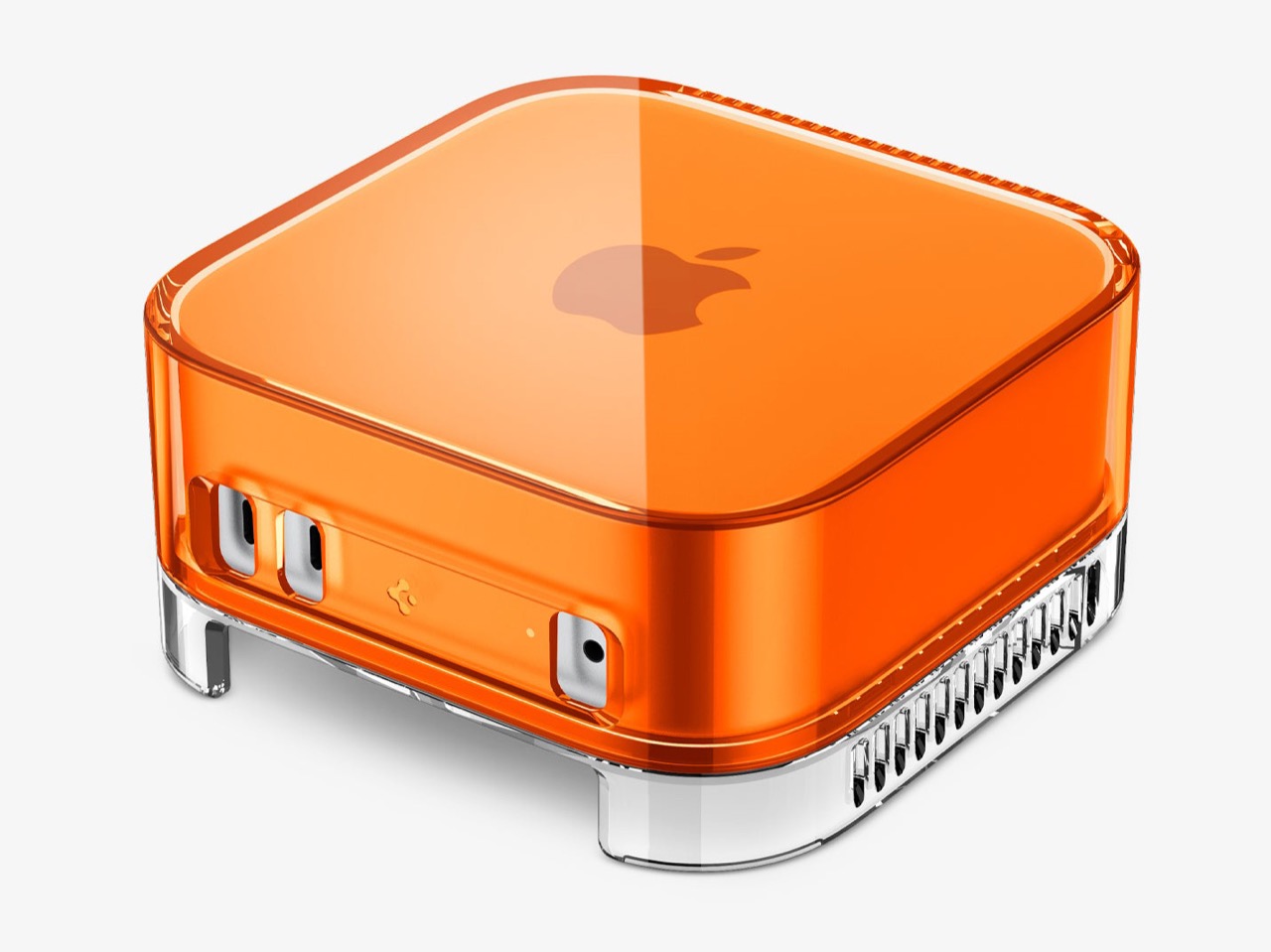
Wouldn’t it be great if Apple would bring back colors and transparency? Like I just read about this new Mac mini case from Spigen that is so fun I want to buy a Mac Mini just so I can buy the case!

2 Likes

This is absolutely true, but it’s also true that the size of the market has increased tremendously during that time. Some quick research suggests that the global smartphone market has grown by about 4x since Cook took over, a period during which Apple’s revenues grew by about 6x. During that time, Apple shipped the iPad and the Apple Watch, and broke out its Services segment. Combined, they account for more than 40% of Apple’s revenues now.

That’s not to denigrate either Cook’s or Jobs’s efforts, merely to point out that they aren’t really comparable. They were playing in different games, much as The Beatles and Taylor Swift do in music.

2 Likes

Some quick research suggests that the global smartphone market has grown by about 4x since Cook took over, a period during which Apple’s revenues grew by about 6x

A growth that was dwarfed in percentage terms by the growth of the personal computer market in the 1980s and 1990s, when Jobs was in and out of charge at Apple. Jobs, like Cook with smartphones, had the PC lead in the late 1970s and, unlike Cook with smartphones, failed to sustain it. So I think they’re actually directly comparable.

As you say, this is not to denigrate either CEO, but it is to react to the constant belittlement of Cook as a lesser leader of Apple. Jobs did things that Cook could not do; Cook did things that Jobs never could do, most notably sustain and build Apple’s success in a massively expanding market.

(One of the effects of that, which I quite like, is that Cook is not beholden in the same way that Jobs was to other companies. Intel not working out? Throw billions at developing Apple’s own chips.)

:laughing:

Interesting topic… what interests me is Apple’s design goals. Maybe it wasn’t expressed back then when designs changed relatively frequently, but I had the feeling there was an idea what they wanted the product’s appearance to say (in addition to being sturdy, reliable, functional etc), ie ‘computing should be fun/playful etc’, or ‘here’s what manufacturing technology has allowed us to do for you’, or ‘we use the latest materials and manufacturing and design to make the device disappear as much as possible, to immerse you in the software interaction’. Maybe it was marketing spin so as to attract more business, but as observed above, for several generations of products we seem to have very little variation.

So I am wondering what they are saying with this… the device should have the slimmest bezels so the user can be more drawn into the software interaction? thin and light are great because… it allows us to carry and use the device and services more? devices should be more or less bland so that accessory manufacturers have something to do? Like, a Mission Statement for their design goals…

Maybe this has been stated by current Apple execs, but I stopped looking at their videos some years ago as I couldn’t stand the inflated language, artificial enviornments etc. While I’m not a trained designer, I do often notice and appreciate product design, and what I miss is Apple making me feel like a co-journeyer into an explained design vision, a goal for our computing experience.

2 Likes

Like, a Mission Statement for their design goals

The closest we really get is at the end of each press release:

“Today, Apple leads the world in innovation with iPhone, iPad, Mac, AirPods, Apple Watch, and Apple Vision Pro. Apple’s six software platforms — iOS, iPadOS, macOS, watchOS, visionOS, and tvOS — provide seamless experiences across all Apple devices and empower people with breakthrough services including the App Store, Apple Music, Apple Pay, iCloud, and Apple TV. Apple’s more than 150,000 employees are dedicated to making the best products on earth and to leaving the world better than we found it.”

1 Like

@silbey , thanks for finding that!

What Apple is writing there is typical meaningless marketing fluff imho. I don’t know where I got it, but I had the feeling Apple of old was more interested in the concept of integrating computing tools to make life more efficient, fun, etc. So this notion of computing with headsets or glasses is sort of in that direction. Having an iphone that is a light, seamless slab of material that a user just uses, is in that direction.

That notion doesn’t really respond to this Topic,( ‘luxury design’ ie materials and look of the device), but making the device disappear as much as possible with only the software interaction remaining. That sort of design goal is what I’m talking about. Maybe it’s out there. Maybe I’m getting old and cynical…

Nobody sells anywhere near as many burgers as McDonalds. And they make a ton of money doing it too. And yet, hardly anyone would argue their burgers are actually good.

5 Likes

So do you feel the goal of “leaving the world better than we found it” is “typical meaningless market fluff”? I think it’s a strategic goal that can provide good guidance for tactical decisions and plans.

1 Like

It is clearly typical meaningless marketing fluff because it’s only there to display virtue. It has absolutely no consequence in the real world. Their actual moto (along with a whole bunch of other quasi-monopolistic global megacorps) is get as rich as you possibly can. And that absolutely has actual consequences in the real world.

5 Likes