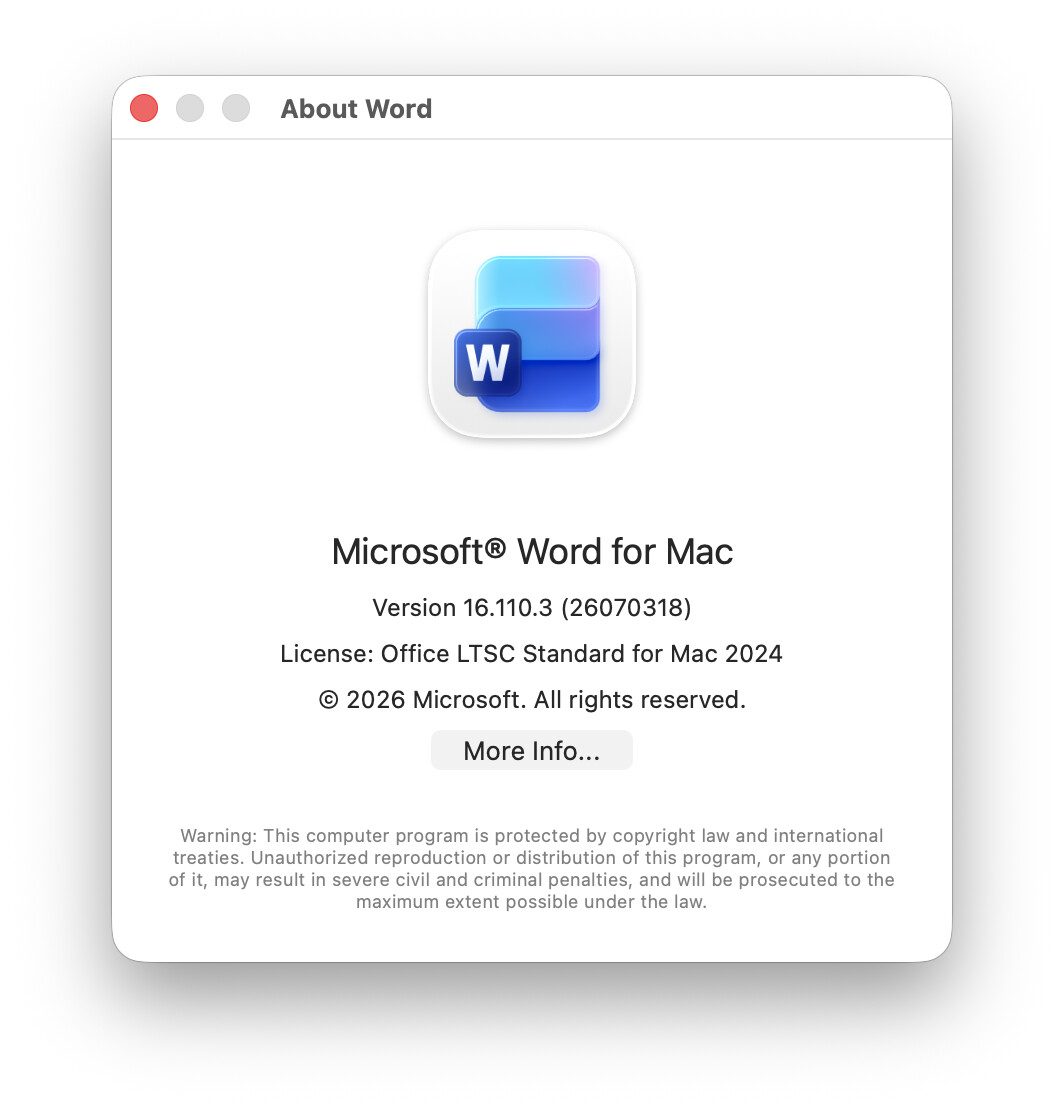
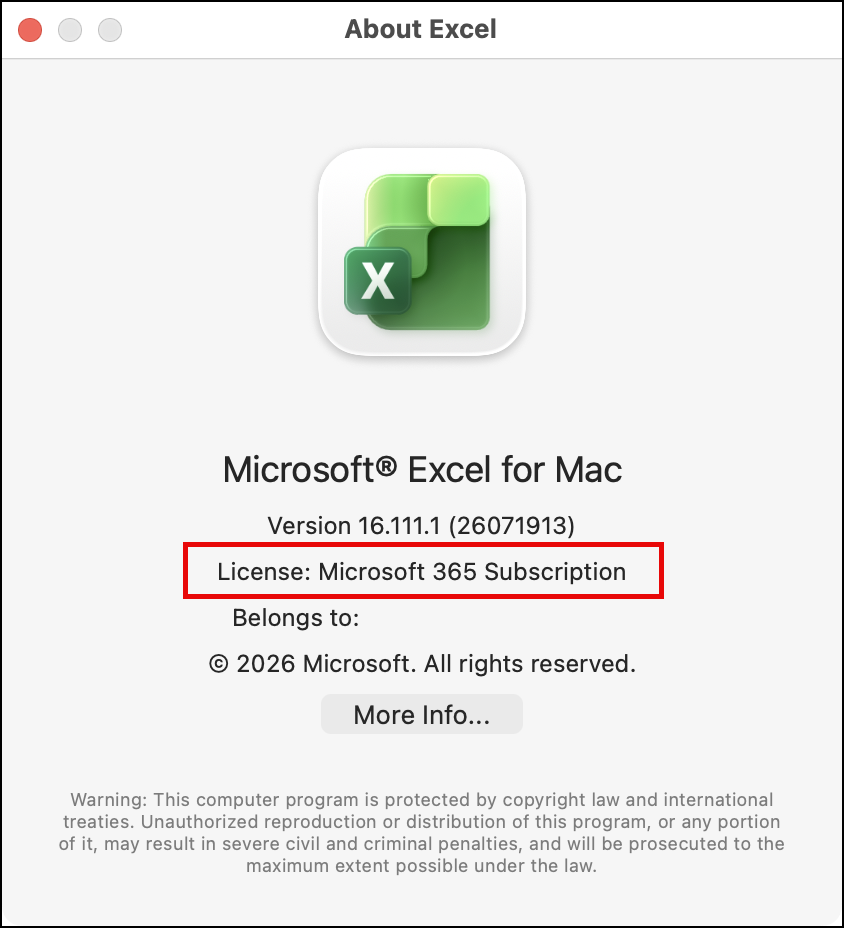
I bought a Groupon for a great deal on Microsoft Office 2024 for Mac (Office), and now that I have installed it, I’m wondering whether it is authentic for several reasons.
From Groupon’s website it can’t guarantee that it’s legit
“Is Groupon Microsoft Office legit?
This one’s tricky, and a frequent source of frustration. Groupon itself doesn’t sell Microsoft software directly. If you see Office deals, they’re usually from third-party vendors. Many users have reported problems with invalid keys or counterfeit software. Best advice? Skip it. Buy software only from official or authorised resellers.”
I think that it is an authentic Office, although you don’t get any feature updates.
The question is whether the terms of the Enterprise volume license permits the license administrator to activate just anyone who buys the coupon. Google says that “The administrator can only activate the software on devices owned or controlled by the enrolled organization and its defined affiliates.”
Allowed: Core employees, internal contractors, and subsidiaries legalized tied to the volume licensing agreement.
Prohibited: External clients, un-affiliated third parties.
(I don’t have a link to the source of the licensing rules on the Microsoft website.)
My opinion is that it is about as sketchy is buying a great deal on a license key from Stack Commerce. As far as you know, it is legitimate. The worst that can happen is the license key gets revoked.
It is like buying a nice watch from a pawn shop. :-)
Could you elaborate on the sketchiness of Stack Commerce? I have purchased two MS Office 2024 licenses from them and {so far} no problems installing or using them.
Maybe I should have said reputed sketchiness. I’ve bought some licenses from them (via SourceForge Deals), including a license for Windows 11 Professional, and it was fine.
But when you ask how can they have keys that are so cheap, the answer is that you don’t want to know how the sausage is made. For example, they may be selling MSDN (developer) keys. Or some other kind of volume license key.
To be clear, I’m not implying that the license keys are stolen or hacked. It’s more like if my employer comped me tickets to a World Cup game and I resold them even though it was supposed to be for my personal use only.
Just want to add that I prefer to buy privacy and security software directly from the developer. For me, it’s worth paying more to ensure there isn’t anything “extra” added to the application or utility, as well as for guaranteed access to updates, patches, and support.
Since the licenses successfully installed, they’re almost certainly authentic licenses. However, they’re almost certainly “grey market” licenses, which may or may not impact your ability to get support from Microsoft, should you need it.
For example, you may have an “LTSC” version of the software, which, IIRC, is only licensed to enterprises, making you technically in violation of the LTSC license. A license for university or non-profit use is another example. They’ll activate just fine, but Microsoft may revoke the license at any time if it discovers that you are not officially authorized to use that license.
On a similar note, I recently read a thread on another forum about someone who purchased substantially discounted products from their company’s employee store, resold them on Facebook marketplace, and was fired because of it. The person didn’t think they did anything wrong, but the company store’s terms of use prohibiting resale were clearly posted, and the person violated those terms. In practice, the person was a low-volume gray market reseller.
My personal view is that buying software from places like StackSocial and Groupon is similar to buying goods at a weekly swap meet. Even though the swap meet itself is a legitimate business, the vendors may be selling fake, unofficially obtained, or stolen products.
So when I’m buying software that must be authentic (such as a password manager) or would cause me problems if suddenly deactivated (if I was a professional photographer, say, and I use Photoshop), I stick to risk-free sellers. As I see it, the potential costs of a security breach or interrupted work outweigh the upfront savings.
Could you elaborate on the sketchiness of Stack Commerce? I have purchased two MS Office 2024 licenses from them and {so far} no problems installing or using them.
Out of curiosity, does the About box identify the licenses on your Stack Commerce version as “LTSC” like @nello 's does?
So when I’m buying software that must be authentic (such as a password manager) or would cause me problems if suddenly deactivated (if I was a professional photographer, say, and I use Photoshop), I stick to risk-free sellers. As I see it, the potential costs of a security breach or interrupted work outweigh the upfront savings.
I don’t think there’s any risk that a copy of MS Office downloaded from Microsoft itself and activated with a gray-market key would be compromised in some way. It’s not that the product is not genuine, it’s just that the entity that sold it to you may not have a legal right to do so.
While I agree that the product is indeed genuine and shouldn’t be compromised if you download it from Microsoft and use a “gray market” key to activate it, you’re taking the chance that Microsoft will de-activate the key in the future if they suspect something janky is going on (like them finding out that someone resold a key that didn’t have the right to).
If you buy a gray market key, keep the receipt and the vendor contact handy in case Microsoft decides to deactivate the license in their licensing servers. You may be able to get the vendor you bought it from to issue you a new key should that occur.