Cloudflare’s “Pay-Per-Crawl” Points to a New Model for Paying Content Creators

Originally published at: Cloudflare’s “Pay-Per-Crawl” Points to a New Model for Paying Content Creators - TidBITS

One of the most significant concerns about the rise of generative AI has been its potential to decouple the relationship between content creators and content consumers. Rather than using a search engine to find original sources of information that might answer our questions, we’re increasingly relying on systems like Google’s AI answers, Perplexity, ChatGPT, and Claude to answer our questions directly. That’s often better for users but poses an existential problem for authors and publishers who rely on ads displayed to human readers for revenue. A new pay-per-crawl proposal from content-delivery service Cloudflare could offer an alternative revenue stream for publishers.

Internet advertising has long been highly problematic because publishers are financially beholden to their advertisers, not their readers, and thus resort to questionable tactics to entice or compel users to view ads. It’s how we ended up with surveillance advertising, where companies like Meta follow you around the Internet in an attempt to display ads you’re more likely to click. (Almost no one does—industry statistics show click-through rates for display ads are well under 1%, leading publishers to increase ad volume in an attempt to boost total clicks.) Readers detest advertising because it has little or nothing to do with why they’re reading, leading to the widespread use of ad blockers and the (usually small-scale) success of publications that support themselves primarily through subscriptions or voluntary contributions.

Near the end of “AI Answer Engines Are Worth Trying” (17 April 2025), I wrote:

However, what I would prefer to see is a system that pays micro-royalties based on the materials used to generate responses. The technical, legal, and social hurdles to implementing such a system are significant, but some form of business collaboration between for-profit content creators and AI companies will be necessary in the long run.

Cloudflare’s pay-per-crawl proposal suggests at least a technical solution to this problem. In essence, Cloudflare proposes that when an AI crawler visits a website, the site’s publisher would allow access only if the crawler agrees to a specified price. If the crawler agreed, the publisher would earn money; if the crawler didn’t agree, it would be blocked.

Pay-per-crawl cleverly resurrects an old idea from the early Web: HTTP response code 402, which was originally intended for handling digital payments but was never widely implemented. Combined with Cloudflare’s proposed Web Bot Auth standards, the system would require AI crawlers to authenticate themselves and set up payment accounts before accessing content. Authenticated crawlers would then be linked to payment accounts, enabling the actual financial transfers. Unauthenticated crawlers would just be turned away.

Since Cloudflare provides content delivery services to 44% of the top 10,000 websites and millions of smaller sites (including TidBITS), the company is in a good position to make pay-per-crawl a reality on both the technical and financial sides. I signed up for the private beta to learn more, but haven’t heard any more from Cloudflare about it yet.

There are undoubtedly numerous concerns with pay-per-crawl, not the least of which is that it would put Cloudflare in a position of even greater power within the Internet ecosystem. It could also hinder academic research and open source projects that lack substantial funding.

However, what I find even more interesting about pay-per-crawl is how it might revive HTTP response code 402 as a more general method of enabling direct transactions between producers and consumers. We’re getting close to some of the micropayment-related ideas in Ted Nelson’s largely theoretical Project Xanadu, which could radically democratize commerce on the Internet (I’ve been beating this drum for decades; see “Xanadu Light,” 29 November 1993).

Imagine if your browser had a wallet you had funded with $25 for a month’s worth of browsing and configured to allow payments of up to 1 cent per page, prompting you for approval of higher amounts. Then, as you browsed the Web, it would automatically pay up to a penny per page, pausing to request permission to pay more if a fancy site—say the Wall Street Journal—was charging 5 cents for a particular article. At a penny per page, your $25 monthly budget would cover roughly 2500 page views—a reasonable amount for many casual Web users.

Of course, if you were getting some of your information from a chatbot, you could be paying it some amount for each response, too, but it would, in turn, be paying the content creators whose work it was ingesting to generate its answers. The same payment approach, though likely with different rates, could work for music, video, and even time-based chunks of interactive media like video games.

Adam Smith’s invisible hand of the market would determine what the prices would be, settling somewhere between the high prices that publishers would undoubtedly prefer and the zero cost that readers are largely accustomed to paying today. In some ways, it’s not all that different from subscribing to a service like Apple Music or Netflix. The key difference is in how payment works. With this system, you pay based on what you actually consume. With Apple Music or Netflix, the aggregators calculate a flat fee that will cover their costs and generate a profit, regardless of how much content you use.

I’m not alone in seeing possibilities here—watch Dylan Beattie’s video explaining the Cloudflare proposal to see him arrive at much the same conclusion.
7 Likes

It’s an interesting and intriguing proposal.

Here in Australia there’s been quite a bit of discussion about news services being crawled by Facebook etc and presenting it to users without payment. The government created legislation that some form of payment should be made for what was essentially ‘stealing’ the copyright material. It’s recently blown up and Facebook have said they’ll no longer pay.

There’s no doubt crawlers are simply scraping information from everywhere. A newspaper site I was involved with still gets around 5,000 hits a week despite the paper having closed over 12 months ago and having no new content.

It would be nice to see sites with highly valuable content (Tidbits, Eclectic Light, DP Review etc) get some sort of revenue from aggregators without needing to sell click ads on their sites…

Indeed it would, but of course the devil is in the details. Cloudflare has left a bad taste in my mouth by blocking access to sites for Tor users (and even Tor relay operators trying to access sites via the clear web), publicly denying it, then blaming their users for “configuring it wrong” when (as I discovered when I contacted site operators to ask why they’re blocking Tor relay operators) the users were just following Cloudflare’s official advice. Then there was their support of sites such as the Daily Stormer (“an American neo-Nazi commentary and message board website that advocates for a second genocide of Jews.” --Wikipedia). Their defense was “free speech” though they certainly didn’t (and still don’t, as far as I know) respect the rights of Tor relay operators in the same way.

I don’t feel comfortable giving a corporation that has committed such abuses in the past the power to decide (1) who might be an AI scraper and thus should be blocked from free access to the web and (2) who might be worthy of compensation because someone clicked on a link to their site.

I don’t think it will help the clickbait headline problem to be paying site operators for link clicks without regard for the quality of the content. How often do you click on links and find out that they’re not what you were looking for? Now suppose you had to pay for that privilege and thus incentivize deceptive links. Or are we going to give Cloudflare the authority to say that neo-Nazi content (Daily Stormer) is worth paying for but privacy advocacy (Tor) should be blocked?

I would love if web sites could have a button that says “tip a nickel” – you click it to say “I liked your content” and seamlessly pay the creator. I once naively thought that cryptocurrency might give us that feature, but I didn’t account for grifters and speculators. But to give a centralized entity like Cloudflare the power to demand money to see a third of the web seems risky.

3 Likes

Tonya and I were talking about how the Cloudflare system might be gamed last night, too. We already have infinite honeypot sites that dynamically create links and pages to keep bots crawling through an infinite space—I’m sure someone will try to do that with pay-per-crawl, too, in an effort to generate high fees from crawler companies. They, in turn, will have to become much more discerning about what they crawl and how often.

As far as the issue of paying in advance for a page that doesn’t turn out to be worthwhile, we’re already doing that, just with our attention and eyeballs. In a scenario where we’re paying some micropayment for each page, the cost will have to be low enough that we don’t change our behavior. A penny per page may be too high. We don’t think twice about turning on the lights even though doing so generates a pay-per-use charge because it’s so low.

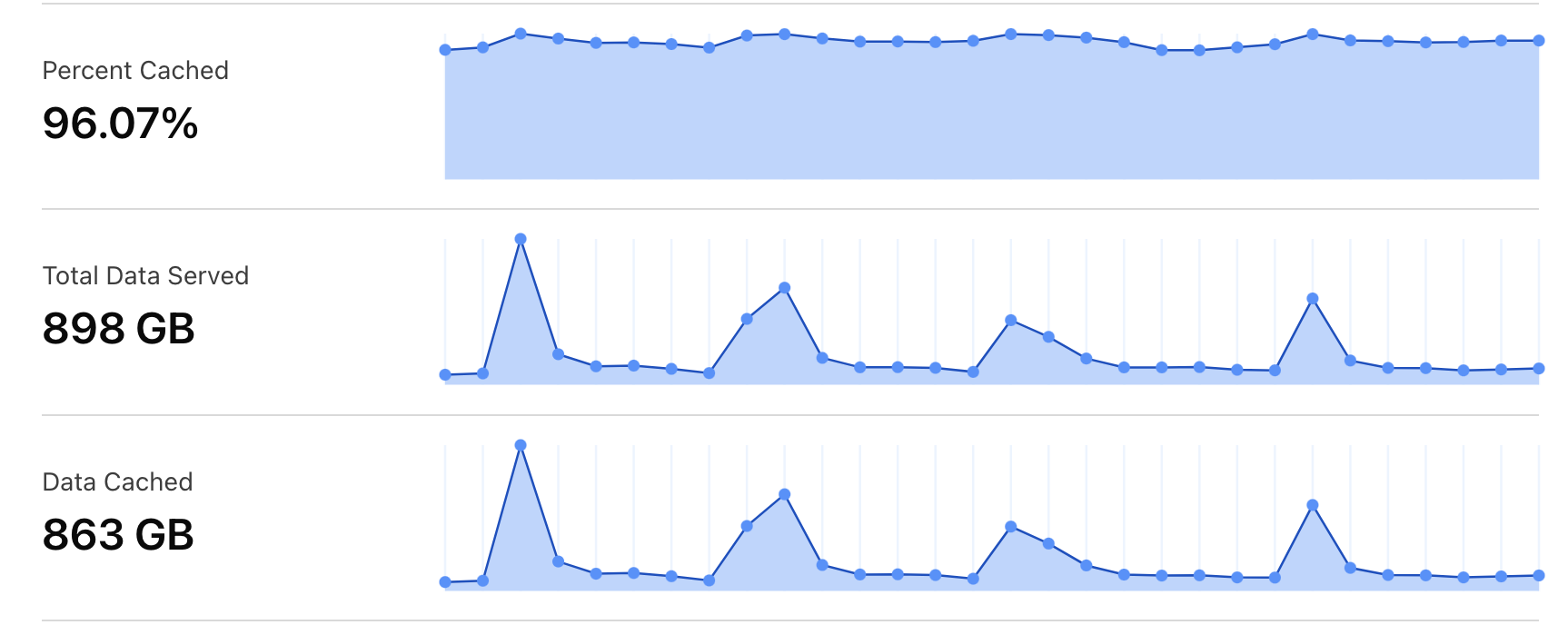
I know people who are not enamored of Cloudflare either, but my personal experience is highly positive. We pay Cloudflare $5 per month for some WordPress-specific integration, but aside from that, Cloudflare’s free plan caching served 868 GB of data for tidbits.com in the last 30 days. And Cloudflare’s human-checking is the only thing that finally stopped the onslaught of spambot-created accounts in our WordPress server.

Nevertheless, I agree that we really don’t want to end up in a situation where Cloudflare becomes even more of a gatekeeper for the Internet. My hope is that once there are some standards surrounding pay-per-crawl, enterprising developers will produce alternative payment systems that allow publishers to put together their own payment systems.

As a consumer of and believer in local news, I’ve found it disturbing, even frightening, that something like the development of an online service like Craigslist could inadvertently destroy the business model of thousands of local newspapers. It’s important to carefully review in advance a replacement financial model like Cloudflare’s to know in advance who might benefit most and who, if anyone, might find their livelihoods suddenly gone. The concept seems quite promising, but those unanticipated outcomes can be deadly.

Isn’t Brave sort of doing something similar to this with their BAT tokens that can be used to somehow reward content publishers? I admit that I find Brave’s model extremely confusing, but I like the concept of micropayments and somehow, easily, being able to reward or pay for content.

Good cautionary note. Though an unanticipated outcome such as the death of the surveillance advertising industry wouldn’t elicit much sympathy from me.

2 Likes

Devil’s advocate question: if an outcome is unanticipated, how likely is it to show up in a study or analysis?

I have to think a lot more will be unanticipated if nobody makes even an attempt at examining possibilities…we do what we can.

1 Like

I’ve received some chump change from Brave in the past. I forget how I signed up!

I am going to come down against this idea. First of all I beg to differ with you that this idea is ‘radical democratization of commerce’. I would simply call it monetization. For the most part, monetization of data has not lead to any kind of improvement in data quality - in fact the opposite is almost always the case. Generally false and inflammatory information has higher value on the internet than true facts. This because it drives more traffic. I could see a situation where the falsehood adds a penny to your information wallet, but the true fact costs 2 cents. Of course in 1993, the idea of ‘democratization’ on the internet was in vogue. But the pillar of democracy is the well informed citizen. Sadly, since 1993, the amount of falsehoods on the internet have made it nearly impossible to become well informed about anything. It is actually easier than ever to create tribalism and political division - which can lead to autocracy. There are some who think that because of this fact, democracy is struggling as a form of government in many parts of the globe.

2 Likes

Interesting interview with the Cloudflare CEO about this proposal.

Also from cloudflare

https://radar.cloudflare.com/ai-insights

1 Like