Hah! I love that my pedantic stylistic comment about this error page has triggered so much discussion.
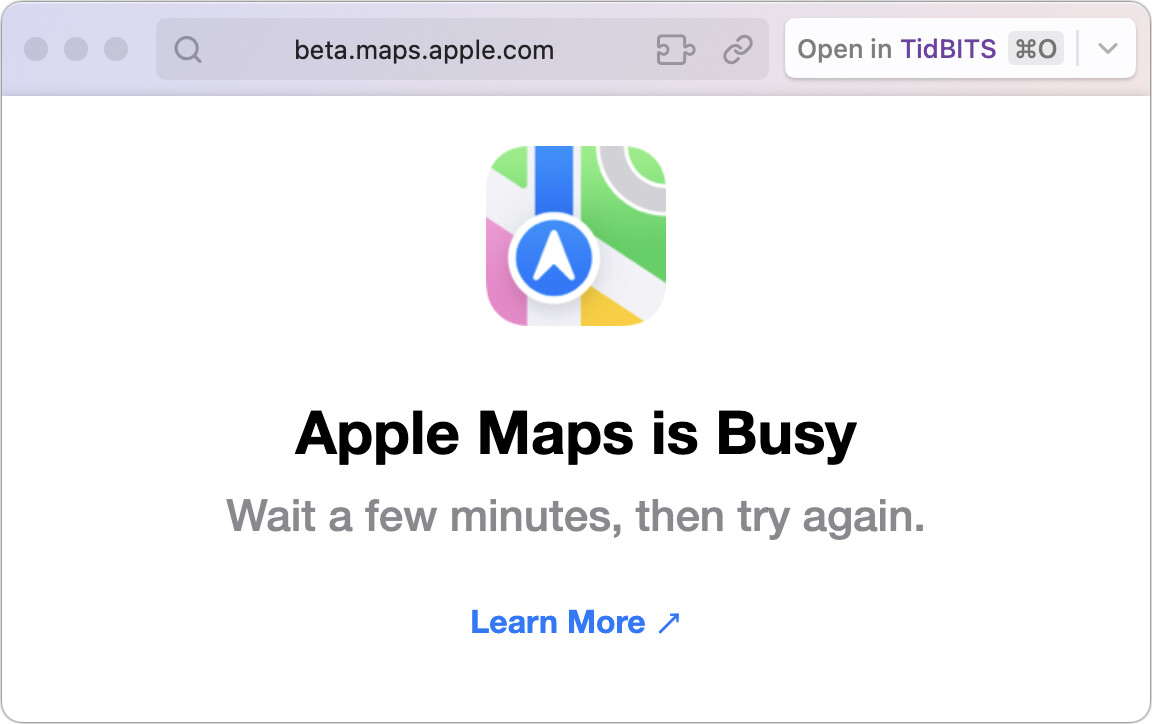
As others have said, this is a style guide issue. Apple has a style guide, which takes its overall cues from the Chicago Manual of Style (as do we). Chicago would prefer title case for titles, which boils down to the following, which would capitalize “is” because it’s a verb:
Capitalize the first and last words in titles and subtitles (but see rule 7), and capitalize all other major words (nouns, pronouns, verbs, adjectives, adverbs, and some conjunctions—but see rule 4).
However, Apple also has its own explicit rules surrounding capitalization too. They’re very clear about how “is” should always be capitalized in a title, too.
capitalization Two styles of capitalization are commonly used at Apple:
- Sentence-style capitalization: This line provides an example of sentence-style capitalization.
- Title-style capitalization: This Line Provides an Example of Title-Style Capitalization.
…
When using title-style capitalization, capitalize:
- The first and last word, regardless of the part of speech
- Nouns, pronouns, verbs, adjectives, and adverbs—no matter their length (for example, It, This, You, Your, My, Is, Are, and Be)—unless noted as an exception below
Skip This Backup
Apple News Is Offline
Passwords Are Locked
It’s not clear whether Apple would consider “Apple Maps is Busy” a title or not. I’d lean toward it being one because it doesn’t have a period at the end, like the line below it. Regardless, it’s wrong to lowercase “is” if it’s supposed to use title capitalization, and it’s wrong to uppercase “Busy” if it’s supposed to be sentence capitalization. Either one could be correct, but what’s shown is just plain wrong.
The “lowercase short words” approach that some were taught in school was probably because many students don’t have a strong grasp of the parts of speech, so saying that verbs should be capitalized but coordinating conjunctions should not be would probably be too complex. What works for freshman English doesn’t necessarily match up with professional publishing.
As an aside, though @frans only touched on it, TidBITS style is to capitalize Web as a noun because it’s short for World Wide Web, and that’s how Tim Berners-Lee and the World Wide Web Consortium (W3C) do it, although the W3C has moved more toward lowercase since I last looked. We still capitalize Web when used as a standalone adjective, as in “Web page,” but we lowercase it when it’s combined with another word, like “website.”
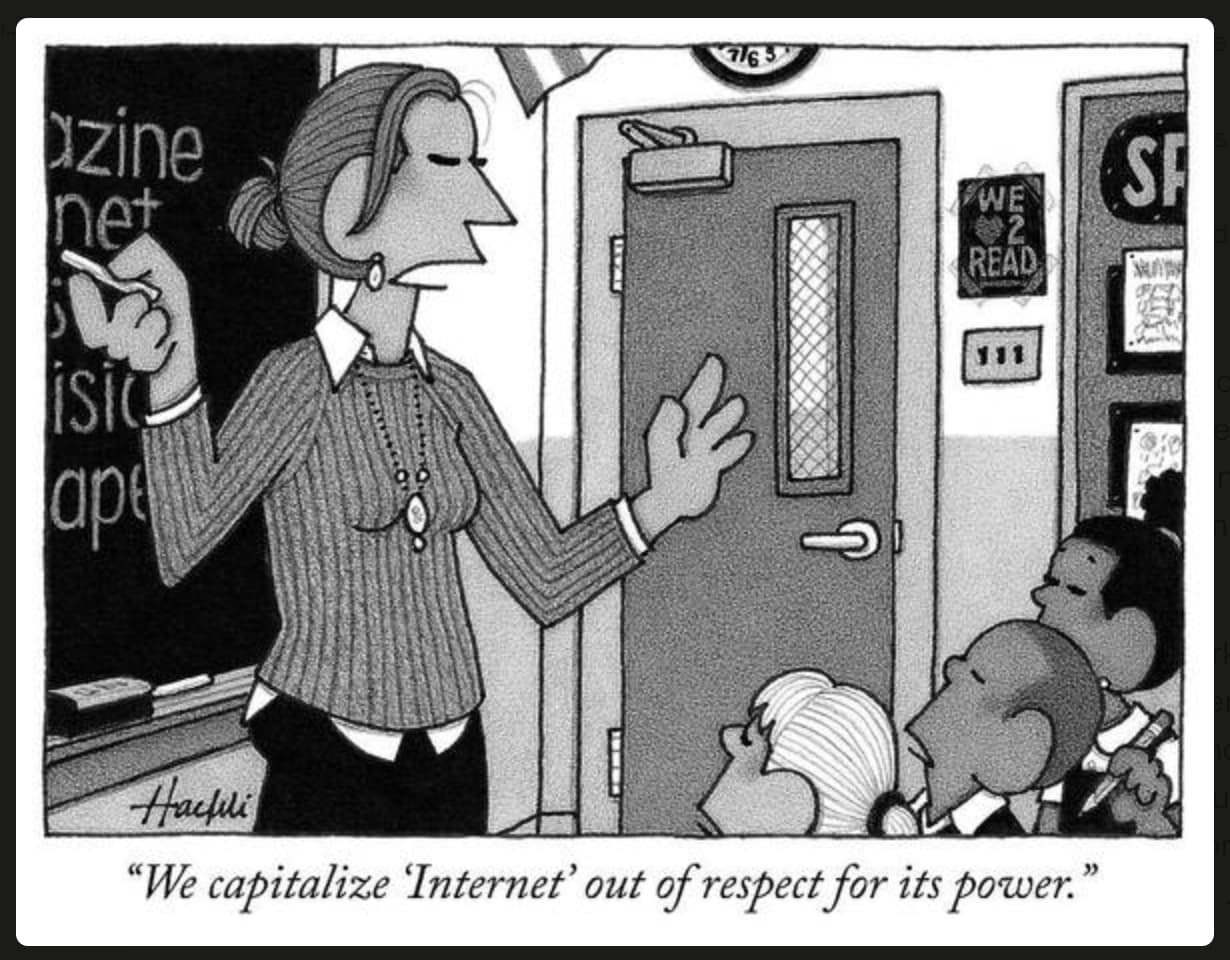
We also still capitalize Internet, and I have a copy of this print on the wall.