About ten years ago Horace Dediu spoke at Úll, an Apple centered conference in Ireland (úll is the Irish for apple) looking at technology cycles. He had it at every 30 years there was a major shift culturally and technologically. That the mainframes/minis and centrally controlled systems of the 50s onward moved to the desktop individualistic era of the 80s on and then to the connected distributed mobile era of the 2010s.
His point was that Apple had successfully navigated and indeed led two of these cycles but he saw little preparation or evidence of what the next one might be.
It feels however like it’s accelerating if anything…
Well compared to Windows 10 and 11, MacOS is a breath of fresh air. I moved to MacOS in 2018 with a Macmini, and haven’t looked back. Our household is mostly all Apple (except for the linux laptop my son is learning with). He also has a mbp ;)
Compared to Windows MacOS has always been a breath of fresh air, and I have been using both since about 1986 (I suppose I have to celebrate some kind of anniversary too ). But macOS has also had its ups and downs. In my experience we’re in a down phase now with bad interface design decisions, lots of little bugs that hamper usability which are not fixed (even after giving Apple feedback about them multipel times).
I also find hardware design has taken a step back. For example, the MacBook Pro I bought last year has no LED that shows if the laptop is on, sleeping or off and it does not have a button plus a series of LEDs to show the charging state of the battery. That may give the laptop a ‘cleaner’ look, but it is a design choice of looks over function, it actually hampers usability. I also think the notch at the top of the screen is bad design. I’m not sure what’s behind there, but since the laptop does not have FaceID it seems it’s only the camera, and that does not need a notch that big. Where Apple designed to perfection before, that is clearly no longer the case sadly
I loved that ad campaign and was so satisfying to see the themes repeated in Tim Apple’s letter.
I’m getting a bit aged and doing some housecleaning. A few years ago, I sold my original Mac (upgraded to 512K), along with system 1.1, Macwrite, MacPaint, an autographed MacPaint manual (Bill Atkinson I think), and a couple of games. I kept two of the Think Different posters in 20x30”frames. The logo at the top of the letter reminded me of my Picasso mousepad, which I tossed in with the Mac. I would be thrilled to see some color come back to the Apple. My favorite Mac was my tangerine iBook.
I do agree that Apple in general is not quite the company it was decades ago. And certainly that it has made some software and hardware decisions that were absolutely horrid. I do, however, celebrate its upcoming 50th anniversary - since it has not only survived (the almost bankruptcy of the late 1990s), but thrived. I lived through ALL those years and stayed an ardent supporter when everyone in the entire world (it seemed) was on the Windows platform. With no internet (except email) back then, I got my hands on and read every Mac/Apple magazine that I could. I love the fact that Apple is one of the most valued companies on the planet. I think it deserves that after all the previous hell it went through.
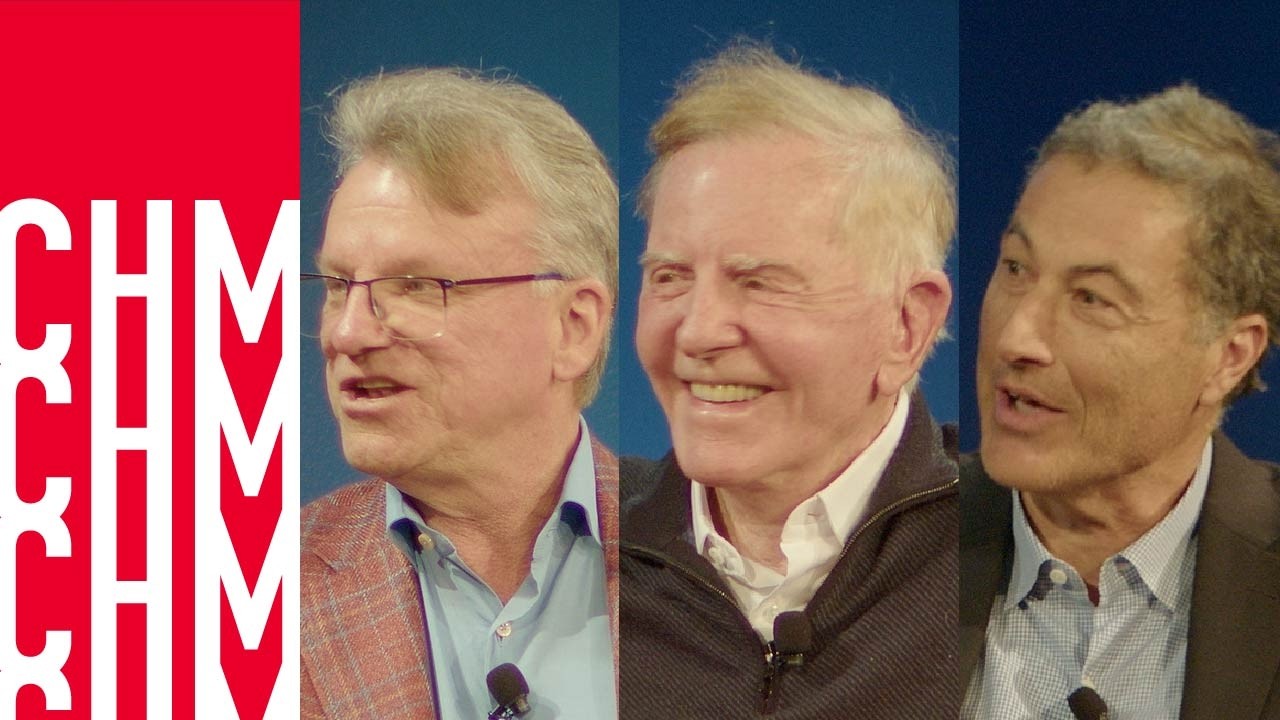
I’d also like to give a shoutout to the Computer History Museum in Mountain View, CA, not only for the special Apple exhibit they have currently on display for the 50th anniversary, but for hosting an excellent program/session of Apple alums (going all the way back to Ronald Wayne in the audience!), and led by David Pogue, who just released a book on Apple’s history. The event is almost 2 hours in length, but I enjoyed every minute of it and so will anyone else who has even a passing interest in this subject:
Sorry to say that the Macs have not had this for some time. I think the last time I had the series of lights indicating battery power left was on my 17” PowerBook! Seeing how much battery life is left was SO convenient, as was the led light on the connector itself to tell you if it is done charging or not. All we have with MagSafe is the led light on the connector, but not the button with the “how much charge is left” series of lights. I also hate it when Apple chooses form over function. We lose every time they do that.
The Mac wasn’t the first or the second computer I owned and used, I was all in on the Commodore Amiga exploring video graphics and had a PC which my then girlfriend would earn money with typesetting equations.
But once I did start using one, around 1988, the thing that impressed me the most was its utility. It was immediately useful. I designed a catalogue for an art exhibition over the course of a weekend and I was hooked.
Macs are useful. That’s always been their best argument.
I don’t pretend to be an English expert but I once read an explanation from Apple of the intended meaning. It suggested it was using different as a noun, something along the lines of Think, ‘different’.
Regardless, I’m eternally grateful for Apple over the years. I started playing with generic, cassette driven machines with text based interfaces and virtually no software. It has BASIC installed and you tried to make it useful. From there I bought an Apple 11C with Appleworks and from there I became a devotee.
By learning to Applescript, and later program, Apple gave me a path to far greater working opportunities than I would have had using other machines (I’m a photographer by trade who worked in media and magazines before moving into IT when computers became popular).
Whilst Apple hardware consistently achieves impressive quality and performance, the degradation of its GUI and software has been a constant source of ongoing disappointment.
Tidbits should be compulsory reading for senior management at Apple. The commentary here is far more detailed and granular than anything you see via a few influencers posting Youtube shorts.
Apple is considerably younger than me, but I’m lucky to have had it run a parallel course to my career.
At least one member of Apple’s executive team is a subscriber, but I don’t know how often he actually reads it. I’ve known this guy for decades, but we correspond only extremely infrequently, and I’ve never gotten even the level of special treatment that other members of the online Mac press do because of it.
Devil’s advocate question, assuming you mean TidBITS Talk not the TidBITS newsletter: do you think the regulars on TBT are representative of the people who generate most of Apple’s revenue these days?
Neither TidBITS readers nor TidBITS Talk participants are representative, sadly. We’re demographic (largely via age) and technical (vastly more experienced) outliers.
And this is why their opinions should be valued. I suspect most on here can remember just how good it was in the past - especially with MacOS. I understand Apple’s focus is more on phone users, but that doesn’t preclude it from improving all their software platforms.
As a user for virtually the entire 50 years, I’ll never understand why they’ve chosen to ignore the HIG which made them ‘different’ to other offerings. Nothing dismays me more that playing hide and seek for basic functionality - and this should not be the specific domain of Tidbits readers.
Perhaps the targeted young folks just don’t know how good it could be.
You don’t have to resort to the deprecated methods of creating bootable backups. There are ways to do it that will work (and are supported by both CCC and SuperDuper!) and are compatible with the security changes made by Apple for macOS. You might want to take the time to get familiar with them so that you aren’t scrambling when Apple finally cuts the old methods (or breaks them again).
Joe Kissell’s “Take Control of Backing up Your Mac” has an excellent discussion on the subject…
I am reading David Pogue’s new book, Apple: The First 50 Years, and it’s bringing back so many memories of old Macs and the pre-internet era. I’d forgotten so much about that time. It was a fantastic experience because everything was new and revolutionary. I recalled my first Mac in 1989, a Mac II with 24-bit graphics card that cost as much as a house, and watching as it displayed – line by line over several seconds – a full color picture. It was mind-blowing, like walking on the moon.
Reading about how Apple engineers made the decisions they did about the user interface was fascinating – one has to remember that no one know the “proper” way to do anything. Everything was an educated guess at best. Some things turned out to be wrong and some things were brilliant (mostly the latter, thankfully).
It makes me think about how different it is for the engineers of today, probably in their 20s, having grown up with computers, internet, touch screens, full color pictures and computer video, to think about human-computer interfaces. Pogue writes about how concepts like copy and paste had to be explained to new users. Users today grew up with that and have no idea there was a time it didn’t exist. That’s got to affect how they think about exposing such features to users.
Sure, sometimes the new people are making weird decisions (especially from a traditional viewpoint), and sometimes they are just doing something to be different. But maybe it works for them and makes sense to them. I can’t say they are totally wrong or the old ways are totally right. Probably some blend of the two is ideal. The pace of change is so fast now there’s little time for gestation. Something controversial like Liquid Glass might be looked back on in a few years and be fine. Maybe not. It’s hard for us old folks to judge. We’re biased toward the past.
Reading the book is making me see the big picture instead of the day-to-day. It’s really been an amazing 50 years (though I didn’t really know Apple until the Mac came out).
@xdev might be right on with the engineering change of generation/command.
I was at San Jose State ’81-’83 majoring in photojournalism, just miles from Apple’s offices, was becoming aware of Apple and desktop publishing and worked at the local paper before heading north to a small paper, where soon we had a photo editor with a Mac-in-a-bag, then we hired a graphics person and got her a Mac. She was on holiday once and I got to do a couple of graphics on the Mac for publication!
(I’ve only ever used Windows on other people’s computers or in VMs on my Mac when it was necessary. Recent developments and experiences with my Apple Devices have led me to install Linux in dual-boot mode on an Intel MBAir, however.)
Maybe I always thought of myself as a ‘different thinker’, and that appealed to me, or maybe it was what I recall from early Apple as focusing on quality, design, and human interface that appealed, combined with the supportive User Group people I met many times. I just recall that using Macs seemed to be a statement in favor of caring, about these aspects of products, and for each other.
In any case I’ve stuck with Apple products for nigh on 40 years myself, so those who started things up must be another decade or more older and well into retirement time, with noobs taking over leadership in these areas. It is what it is.
I’m curious to know, for those reading Pogue’s book, are you reading it on paper or digital (and if so which/how)?
Audio. Pogue reads it, which is neat, and he plays actual audio recordings from some of the people he quotes!
(The audiobook isn’t an afterthought: he came up with “start sidebar” and “end sidebar” sounds for the many sidebars in the book, so you’re aware they’re tangental, and when he talks about things like Apple TV commercials or videos, he describes what is happening in the visuals as the sound effects play in the background. I am impressed by the quality.)
 ). But macOS has also had its ups and downs. In my experience we’re in a down phase now with bad interface design decisions, lots of little bugs that hamper usability which are not fixed (even after giving Apple feedback about them multipel times).